How UCC Searches and Tax Debt Verification Help Lenders See the Full Picture Published October 5, 2026
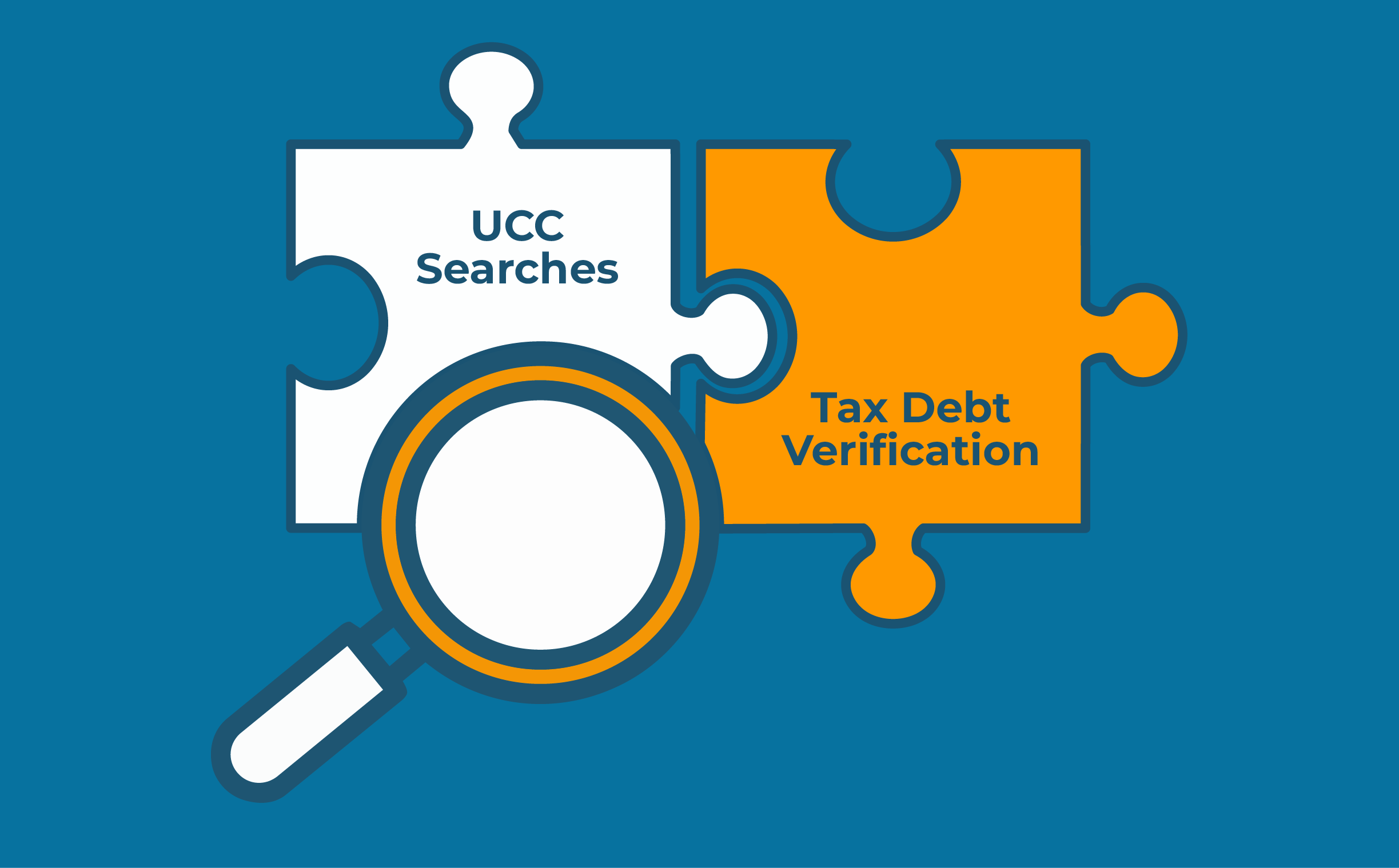
The lending environment looks different than it did a year ago. Uncertainty has become the new norm in today’s business landscape, and that means the way lenders are thinking about verification needs to meet the moment.
For many lenders, UCC filings are a fundamental part of any verification process. A properly filed UCC financing statement helps establish a lender’s interest in a borrower’s collateral, while a UCC search can provide visibility into other secured parties that may have claims against the same assets.
But a UCC search only tells part of the story.
A borrower can have a properly filed UCC and still carry hidden tax debt that creates another claim against its assets. Federal and state tax liens follow different rules from UCC filings, and they can affect a lender’s position in ways that do not appear in a standard UCC search.
That makes the relationship between UCC due diligence and tax debt verification more important than ever. Together, they can provide lenders with different — and complementary — views of borrower risk. Lenders need to understand not only what collateral has been pledged, but what other obligations could affect their position in that collateral.
What a UCC search might not catch on its own
UCC searches can reveal important information about a borrower’s secured obligations. They can show whether another lender has already filed against the borrower or whether the same assets may have been pledged elsewhere. But they rarely share the full picture.
A borrower may also be facing litigation, judgments, bankruptcy or unpaid federal and state taxes. Each can meaningfully change the risk profile a lender is evaluating.
UCC searches, public-record tax lien searches and federal tax debt verification answer different questions. UCC searches identify financing statements filed by secured parties. Public-record tax lien searches identify filed notices of federal and state tax liens. Federal tax debt verification uses IRS account information to identify outstanding federal tax obligations, including debt for which no public lien notice has been filed. IRS account information does not replace UCC or public-record lien searches. Combining these tools gives lenders a broader view of borrower obligations.
Why tax debts are so important to catch
Tax liens are often one of the less visible pieces of commercial due diligence.
Judgments and litigation typically surface through court records that lenders may already review. Tax debt follows a completely different path. A federal tax lien can arise before the IRS files a public notice. Filing a Notice of Federal Tax Lien alerts creditors to the government’s existing claim against the taxpayer’s property and rights to property. Depending on the circumstances, that claim can affect a lender’s priority.
The process also varies across jurisdictions. In California, for example, the Franchise Tax Board may record a Notice of State Tax Lien with county recorders for real property or file it with the Secretary of State for personal property.
A lender conducting a UCC search alone can therefore have a clear view of the borrower’s secured creditors while still missing a tax claim that could affect the lender’s position. This is important to understand because UCC filings and tax liens are governed by different legal frameworks. A lender cannot assume that a clean UCC search means there are no other claims against the borrower or its assets.
The tax-information landscape is also changing as federal and state agencies continue to modernize systems and enforcement processes. For lenders, that reinforces the value of using verification methods designed specifically to identify tax obligations rather than relying on UCC records as a proxy. That makes tax debt an important part of the broader diligence process, particularly for lenders managing large portfolios.
UCC filing should only be the beginning
The same principle applies to UCC filings themselves.
Getting the filing right at origination is critical. The debtor’s legal name, filing location and collateral description all need to be accurate. A mistake at this stage can affect the lender’s ability to establish or maintain its interest. But a UCC filing also needs ongoing maintenance.
Financing statements generally remain effective for five years. Before that period ends, a lender is required to file a continuation if the financing statement is to remain active. Changes to a borrower’s legal name or other information may require an amendment. New UCC filings from other creditors can also change the lender’s understanding of the borrower’s obligations and collateral.
In other words, lenders need to know what is affecting the borrower after the initial filing, not simply what was true on the day the loan closed.
Tax debt operates in the same way. A lender may have properly perfected its security interest, but the borrower’s financial circumstances can change. New tax obligations can arise. A tax lien can be filed. Another creditor can record a UCC. A legal dispute can develop. Any of these events can give a lender a reason to reassess the borrower’s risk.
This is why ongoing monitoring becomes valuable. UCC portfolio management tracks filing status and changes in secured-creditor records. Public-record tax lien monitoring identifies newly filed tax lien notices, while ongoing federal tax debt monitoring can identify changes in IRS account information, including unpaid taxes that have not resulted in a public lien notice. Together, these tools help lenders identify changes that may warrant further review.
How to build a more comprehensive due diligence process
For lenders, the goal is not simply to conduct as many searches as possible. It is to understand what each search tells them and where the gaps between them exist.
UCC filings provide an important view into a borrower’s secured obligations. Tax lien searches and tax debt research provide another view into the borrower’s obligations to federal and state taxing authorities. Litigation, judgment and bankruptcy searches add further context. Bringing those pieces together can give lenders a clearer understanding of the borrower and the assets supporting the loan.
That process starts at origination, with accurate filings and comprehensive searches. It continues throughout the life of the loan, with UCC continuations and amendments, portfolio monitoring and updated searches when circumstances warrant.
For lenders managing these processes across a large portfolio, having a partner that can support both the filing and search work and the broader due diligence process can make it easier to maintain that visibility. UCC search and filing services can help lenders establish and maintain their interests, while tax lien searches and federal tax debt monitoring can help identify obligations that sit outside the UCC record.
Looking beyond the UCC to tax debt and other obligations gives lenders a more complete picture of what is happening with the borrower and the collateral supporting the loan. The value lies in understanding how these pieces work together, so lenders can identify changes earlier, recognize when additional review may be warranted, and act before those changes become larger problems. In today’s lending environment, due diligence is most useful when it extends beyond the initial search and filing to give lenders a clearer view of how the borrower’s position is changing over time.