Podcast: How We 2x Sales Revenue & Reduce Sales Cycle By 50% Published September 1, 2026

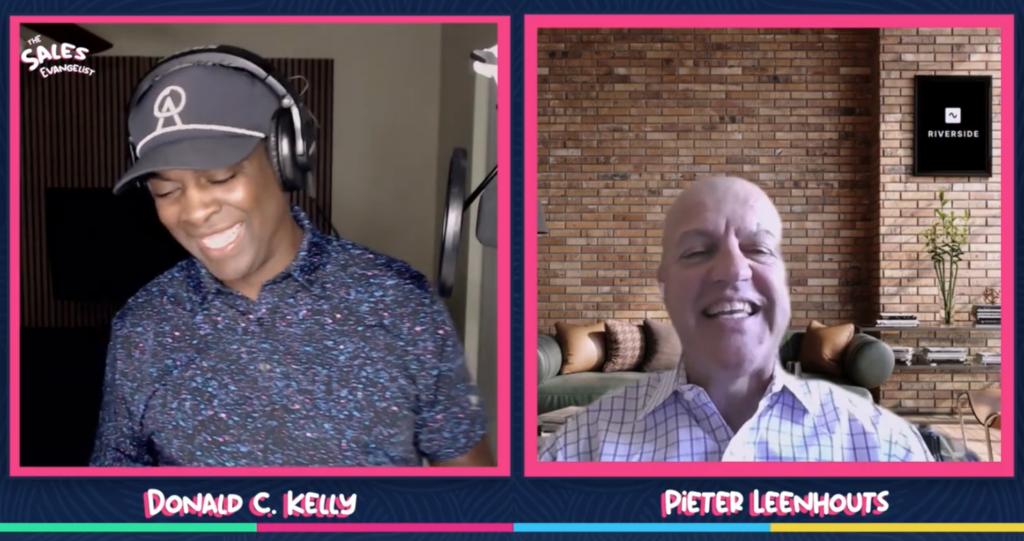
Host: Donald Kelly
Guest: Pieter Leenhouts
On The Sales Evangelist podcast, our own VP of Sales, Pieter Leenhouts, sat down with Donald Kelly to discuss building a sales pipeline that prioritizes structure, personalization, and real customer engagement.
Imagine doubling your close rate and cutting your sales cycle in half. That’s not a hypothetical. It’s exactly what Pieter Leenhouts and his team did at Tax Guard, a Cogency Global company that sells to banks and financial institutions.
Pieter walked me through exactly how they pulled it off, and it wasn’t magic. It was math, structure, and a relentless focus on the front end of the pipeline.
Why Their Sales Cycle Was So Long To Begin With
- Tax Guard’s solution was new to the financial institutions they sold to, so reps had to spend real time educating buyers before those buyers even understood why they needed it.
- That education requirement, combined with deals that stalled out with the wrong contacts, created a long sales cycle and a lower close rate.
- Fixing it started with the pipeline itself, not with pushing reps to work harder.
Give Every Rep the Right Size Pipeline, Not Just More Deals
- Pieter’s team found that around 120 opportunities was the right pipeline size for most of their account executives, though the number flexes based on how efficient a rep is.
- Instead of leaving reps to self source every opportunity, the team loads a portion of that pipeline for them, so reps spend more time working real opportunities and less time hunting for net new business.
- Their market of five to ten thousand financial institutions is well defined, which makes it possible to plan pipeline size with real precision instead of guessing.
Split the Pipeline: 70 Percent Pre-Handraiser, 30 Percent Post-Handraiser
- Of those 120 opportunities, about 70 percent sit in the pre-handraiser stage, where reps are still working to connect with people.
- The remaining 30 percent sit in the post-handraiser stage, where there’s already an active, ongoing conversation with the customer.
- That split keeps reps focused on outreach without starving the deals that are already moving.
Marketing and Sales Load the Pipeline Together
- Pieter is careful to point out that loading the pipeline isn’t a sales-only effort. It’s a collaboration between sales leadership and marketing leadership.
- Marketing helps identify and prioritize which accounts and departments actually fit where Tax Guard’s solution applies.
- That partnership is part of why the team can hand reps a healthier mix of fast cycle and slow cycle opportunities instead of leaving it to chance.
Why They Kept AEs on the Full Buyer Journey Instead of Handing Off to BDRs
- Because their solution requires ongoing education, Pieter’s team decided against using BDRs or SDRs to book appointments and hand off to AEs.
- The same person a buyer starts talking to needs to stay with them as a trusted advisor through the entire education process.
- Pieter is clear that this only makes sense because of how complex and unfamiliar their solution is. A more transactional sale can absolutely work with a BDR handoff.
The Cadence: 17 Touches Over 70 Days
- Each opportunity in the pipeline follows a defined cadence, roughly 17 touches over 70 days, with three to five contacts tied to each account.
- That structure turns follow-up into a math exercise. Once you know the number of opportunities, steps, and contacts, you know almost exactly how many activities a rep needs to complete each day.
- The cadence isn’t automated. Reps still show up and do the work themselves, which keeps the process personal instead of robotic.
Personalization Is What Makes the Math Work
- Pieter gets five to six hundred pitches a day himself, so he knows exactly what gets ignored: generic, unpersonalized outreach.
- His team uses AI to gather background information quickly, but the personal touch, referencing where someone went to school or what they care about, still has to come from the rep.
- That combination of structure and personalization is what actually breaks through the noise instead of just adding to it.
How They Catch Reps Who Are Gaming Activity Numbers
- To catch reps who rack up huge activity numbers without real substance, like hanging up before voicemail or blasting the same email to everyone, Pieter’s team looks past raw activity totals.
- They review call recordings and email engagement to see whether real conversations are actually happening, not just whether the activity got logged.
- The goal isn’t to catch people doing something wrong. It’s to find the reps who are getting real engagement and figure out what they’re doing differently so the whole team can replicate it.
Weekly and Monthly Rhythms Keep the Team Accountable
- Every rep gets a weekly one on one that covers both big strategic issues, like what’s happening in the market or with competitors, and specific opportunities that need a plan to close.
- Once a month, Pieter’s team reviews the front end metrics as a group: how many people are in cadence, how many emails are opening, how many real conversations are happening.
- They also track Net Promoter Score to measure how the sales experience actually felt to the buyer, not just whether a deal closed.
Their Tech Stack: Salesforce, Gong, Gong Flows, and Delighted
- Salesforce is their core CRM, and Pieter says most of what makes it powerful is what gets plugged into it.
- Gong records and analyzes sales conversations, which lets the team track things like how often pricing objections come up and coach reps faster than they could otherwise.
- Gong Flows adds structured outreach sequences with AI built in, and Delighted measures NPS so the team can see how the buying experience felt from the customer’s side.
The Numbers Pieter’s Team Watches Every Week
- Close rate and pipeline velocity are the two headline numbers Pieter checks first, since they show whether the whole system is working.
- Underneath those, his team tracks how long deals sit in each of their seven pipeline stages, with alerts when something sits too long.
- They also watch the quality of the opportunities reps are given and how well each rep prospects into the right people, since strong activity numbers mean nothing if they aren’t pointed at the right accounts.
“Activities create opportunities, opportunities create sales. The only thing we control is our activity level.” — Pieter Leenhouts